
Do the Work
The bones of a game, AI slop, and how an idea becomes reality

Back in the dawn of my career, I spent a year working on the first drafts of quests and locations in Skyrim. For various reasons, I ended up leaving before the game launched. I left on what I thought was good terms, but when Skyrim eventually came out, I was shocked to find that they had removed my name from the design credits. When I reached out to my old lead, he said “Your work isn’t in the game anymore.”
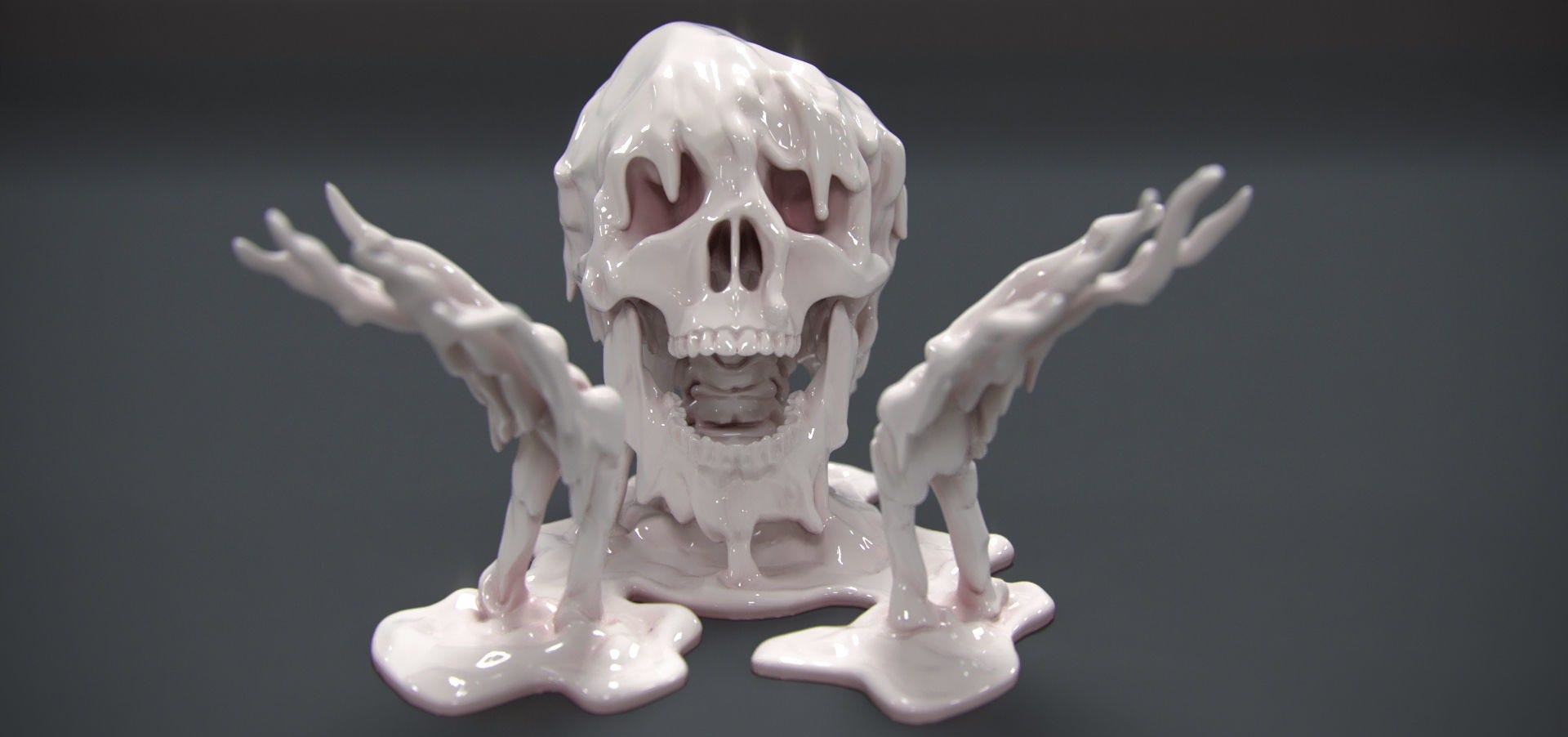
Except those quests were still in the game, still using the structure I built. The characters I came up to populate towns and cities were still there. The couple I named after newly-married friends of mine were still there, names and marriage intact. My first-pass dialogue had been rewritten, sure, but I had built the bones it all used, and they were still part of the final body of work.
Are the bones part of a body, even if they’re not the part you see on the outside?
Design is More Than Skin Deep
Now, nearly 15 years later, I’m long since over that particular indignity, lost in the river of indignities that this industry floods us with daily. But that incident was brought to mind again because of something that Sven Vincke, CEO of Larian, said during an interview with Bloomberg’s Jason Schreier:
Under Vincke, Larian has been pushing hard on generative AI, although the CEO says the technology hasn’t led to big gains in efficiency. He says there won’t be any AI-generated content in Divinity — “everything is human actors; we’re writing everything ourselves” — but the creators often use AI tools to explore ideas, flesh out PowerPoint presentations, develop concept art and write placeholder text.
The use of generative AI has led to some pushback at Larian, “but I think at this point everyone at the company is more or less OK with the way we’re using it,” Vincke said.
The backlash has been fierce and fast. Vincke has backpeddled, clarifying:
I was asked explicitly about concept art and our use of Gen AI. I answered that we use it to explore things. I didn’t say we use it to develop concept art. The artists do that. And they are indeed world class artists.
We use AI tools to explore references, just like we use google and art books. At the very early ideation stages we use it as a rough outline for composition which we replace with original concept art. There is no comparison.
There’s some confusion here whether this is “just part of the research process” (which raises questions about why the notoriously error-prone AI would be something to rely on), or if this means creating early rough drafts of work that is built on later. But in the ensuing firestorm, he’s been quick to reassure people “it won’t be in the final product.”
The Seed of an Idea
Now, I’ve mused about the idea of using a very carefully- and ethically-trained AI as a sort of “rapid first-draft engine”. And I’d certainly welcome a way to get past the empty page of the first-draft process. But this isn’t a process that I think would result in faster work. But even if you completely ignore the ethical issues of using AI trained on unpaid labor in your massive product, any parts of the creative process that you skip with AI will only have to be addressed later.
You still have to do the work.
See, this has been one of the common arguments used by AI’s defenders online — that it’s fine as a first step, as long as it’s not in the final product. They’ve argued that it’s no different from looking through other people’s work for inspiration.
But anyone who’s worked in a creative profession knows that that’s very different from actually doing the work.
You could argue that any creative process begins with a similar seed as an AI prompt. If I’m writing a design for a quest, I’ll sit down with a simple first guiding goal — say, “a single-player open-world fantasy quest using these characters and places, with these themes and this amount of freedom, offering options for these kinds of gameplay, and one or two key moments I want to build to”.

I can see using AI to come up with a twenty variations on parts of that seed idea, and then picking the one I want to move forward with.
But as they say, ideas are cheap — it’s realizing them that takes work and skill.
Art is in the Process
The nice thing about art — whether it’s writing, designing, music, illustration, or whatever — is that you have to consider every piece of it. You have to write every word, play every note, render every inch of a piece; conversely, you also have to consider what you don’t write, play, or render. It takes meticulous thought about both the micro details and the macro concept, and you do it over multiple drafts, as you constantly think about it all. There are happy accidents, sure, but it still takes work to make them possible.
This is why writers often talk about “writing to figure out what I’m thinking”, because the creative process is the process of interrogating your own ideas in detail.
That seed idea I talked about earlier isn’t a fully formed design until I’ve done this process, writing out a draft, reading back through it with different players’ experiences in mind, revising to adjust for those new considerations, and repeating it often.
That process is where I figure out what isn’t really working. The challenge that feels out of place. The sticking point in the story that I labor over until I realize it’s indicative of a bigger problem that requires reworking the larger experience. The finicky moment that inspires me to add a counter-intuitive element that brings the whole experience together. That’s the hard part, but it’s also the exciting part.
That is the work of making art.
And if you outsource that work to AI, you don’t get that consideration. You get a computer’s uncritical approximation of what that might look like, and 50% of the time it falls apart under scrutiny.
Bones Made of Slop
That concept stage is what forms the bones of your game. It’s vital for figuring out how you want the full game to work. And, frankly, it’s the most fun part of development.
Using AI, especially for “exploring concepts”, means you’re not properly thinking about any of that. You’ve just taken that first idea and let a machine roll out an average assumption based on it.
If your work is built on AI slop bones, it’s most likely to show in the final piece. Best case, you’ll have to spend much longer revising the work to remove those unthinking assumptions.
At that point, AI isn’t saving you time anymore, it’s just giving you a page filled with garbage that you have to erase before you can get down to writing on it.
You still have to do the work.
Why It Matters
Now, Sven Vincke has earned a lot of good will from game developers before, not just because of the quality of Larian’s games, but for speaking out against the rampant greed and layoffs in the game industry. Which is why it’s such a heel turn to see him bragging about turning to AI to augment or replace developers’ work.
I’m not making any predictions about Larian’s upcoming game. Goodness knows, it’ll be in development for a long time yet, and there are excellent developers there who will be doing their best to make it work.
But they’ll be doing that work in spite of the mandatory use of AI, not because of it.